AI in functional medicine: Personalized care 2026
Discover how AI transforms functional medicine in 2026 with automated workflows, personalized care protocols, and enhanced diagnostic accuracy for better patient outcomes.

AI is saving functional medicine practitioners over 4 hours daily by automating complex clinical workflows. As chronic disease management becomes increasingly personalized, AI-powered platforms now generate protocol-specific treatment plans, analyze longitudinal lab data, and create individualized nutrition recommendations. This guide explores how AI transforms functional medicine practice through automation, enhanced diagnostic accuracy, and seamless EHR integration while maintaining the essential human element of clinical care.
Table of Contents
- Introduction To AI In Functional Medicine
- How AI Automates Complex Functional Medicine Workflows
- AI-Driven Personalization In Nutrition And Care Protocols
- Advanced Longitudinal Lab Data Analysis Powered By AI
- Debunking Common Misconceptions About AI In Functional Medicine
- Integration Of AI Solutions With EHR Systems In Functional Medicine
- Practical Benefits And Challenges Of Implementing AI In Practice
- Conclusion: Maximizing AI's Potential In Functional Medicine
- Explore AI Solutions For Functional Medicine Practices
Key takeaways
| Point | Details |
|---|---|
| Workflow automation | AI automates complex protocols, saving practitioners 4+ hours daily and reducing treatment plan errors by 40%. |
| Personalized nutrition | AI generates individualized meal plans aligned with functional medicine frameworks, improving patient adherence and symptom control. |
| Enhanced diagnostics | AI-driven longitudinal lab analysis boosts diagnostic accuracy by up to 30% in chronic disease management. |
| EHR integration | Seamless integration with Practice Better and Cerbo improves clinical data management by 75%. |
| Clinical support | AI augments decision-making without replacing practitioner judgment, requiring ongoing clinical oversight. |
Introduction to AI in functional medicine
AI represents the convergence of machine learning algorithms with functional medicine's systems-based approach to chronic disease. These technologies analyze complex patient data to generate insights that support personalized treatment strategies.
Functional medicine addresses root causes of multifactorial conditions through comprehensive protocols. The Bredesen protocol targets cognitive decline through metabolic optimization. The Shoemaker protocol treats biotoxin illness with specific diagnostic and treatment sequences. The Wahls protocol manages autoimmune conditions through targeted nutrition and lifestyle interventions.
AI-powered clinical workflow platforms now automate these complex frameworks. They interpret patient histories, lab results, and symptom patterns to generate protocol-specific recommendations. This automation addresses the growing demand for personalized chronic disease management as practitioners face increasing patient loads and administrative burdens.
Recent developments show AI healthcare implementations saving 4+ hours daily for busy practices. Key capabilities include:
- Automated care plan generation based on established protocols
- Real-time adaptation to changing patient data
- Pattern recognition across thousands of biomarkers
- Integration with existing clinical systems
The technology supports rather than replaces clinical judgment. Practitioners maintain full oversight while AI handles time-consuming data synthesis and documentation tasks.
How AI automates complex functional medicine workflows
AI transforms the most labor-intensive aspects of functional medicine practice. Traditional protocol implementation requires synthesizing patient histories, lab panels, symptom inventories, and dietary assessments. This manual process often takes 90 minutes per patient for initial consultations.
AI platforms analyze this data in seconds. They cross-reference patient information against protocol requirements, identify relevant interventions, and generate comprehensive treatment plans. The technology recognizes patterns that signal specific protocol pathways, automatically tailoring recommendations to individual presentations.
Studies demonstrate AI automation reduces clinical protocol errors by approximately 40%. This improvement stems from consistent application of complex decision trees that might otherwise introduce human oversight gaps. The systems flag contradictions, highlight missing assessments, and ensure protocol completeness.
Automation in healthcare workflows delivers measurable efficiency gains:
- Initial assessment documentation reduced from 60 to 15 minutes
- Follow-up care plan updates completed in under 5 minutes
- Automated supplement and nutrition protocol generation
- Instant protocol adjustments based on new lab results
The functional medicine AI assistant handles data interpretation while practitioners focus on patient interaction and clinical decision-making. This division of labor maximizes both efficiency and care quality.
Pro Tip: Always validate AI-generated protocols against patient-specific factors like medication interactions, comorbidities, and individual tolerability patterns before finalizing treatment plans.
AI-driven personalization in nutrition and care protocols
Nutrition represents a cornerstone of functional medicine, yet creating truly personalized meal plans demands extensive time and expertise. AI solves this challenge by analyzing dietary restrictions, food sensitivities, metabolic requirements, and therapeutic goals simultaneously.
The technology generates meal plans that align with specific protocols. For Wahls protocol patients, AI ensures adequate nutrient density while respecting autoimmune triggers. For Bredesen patients, it optimizes ketogenic ratios and nutrient timing. Each recommendation accounts for individual preferences, cooking skills, and lifestyle constraints.

Patient adherence improves dramatically with personalized nutrition. Research shows customized meal planning increases protocol compliance by 45% compared to generic dietary guidelines. Patients receive shopping lists, prep instructions, and recipe variations that fit their daily routines.
AI-powered nutrition personalization enables dynamic adjustments:
- Real-time modifications based on symptom tracking
- Seasonal ingredient substitutions
- Budget-conscious alternatives
- Cultural and religious dietary accommodations
An AI assistant for nutritionists handles the computational complexity of balancing macronutrients, micronutrients, and therapeutic compounds. This automation frees practitioners to address behavioral barriers and provide motivational support.
Pro Tip: Use AI-generated meal plans as starting templates, then refine based on patient feedback during follow-up visits to build trust and demonstrate personalized attention.
Advanced longitudinal lab data analysis powered by AI
Functional medicine practitioners track dozens of biomarkers across multiple time points. Manual interpretation of this longitudinal data proves overwhelming. Subtle patterns indicating disease progression or treatment response often go unnoticed in spreadsheets and lab portals.
AI excels at detecting these patterns. Machine learning algorithms compare current values against historical trends, population norms, and protocol-specific targets. They identify correlations between biomarker changes and clinical outcomes that human analysis might miss.
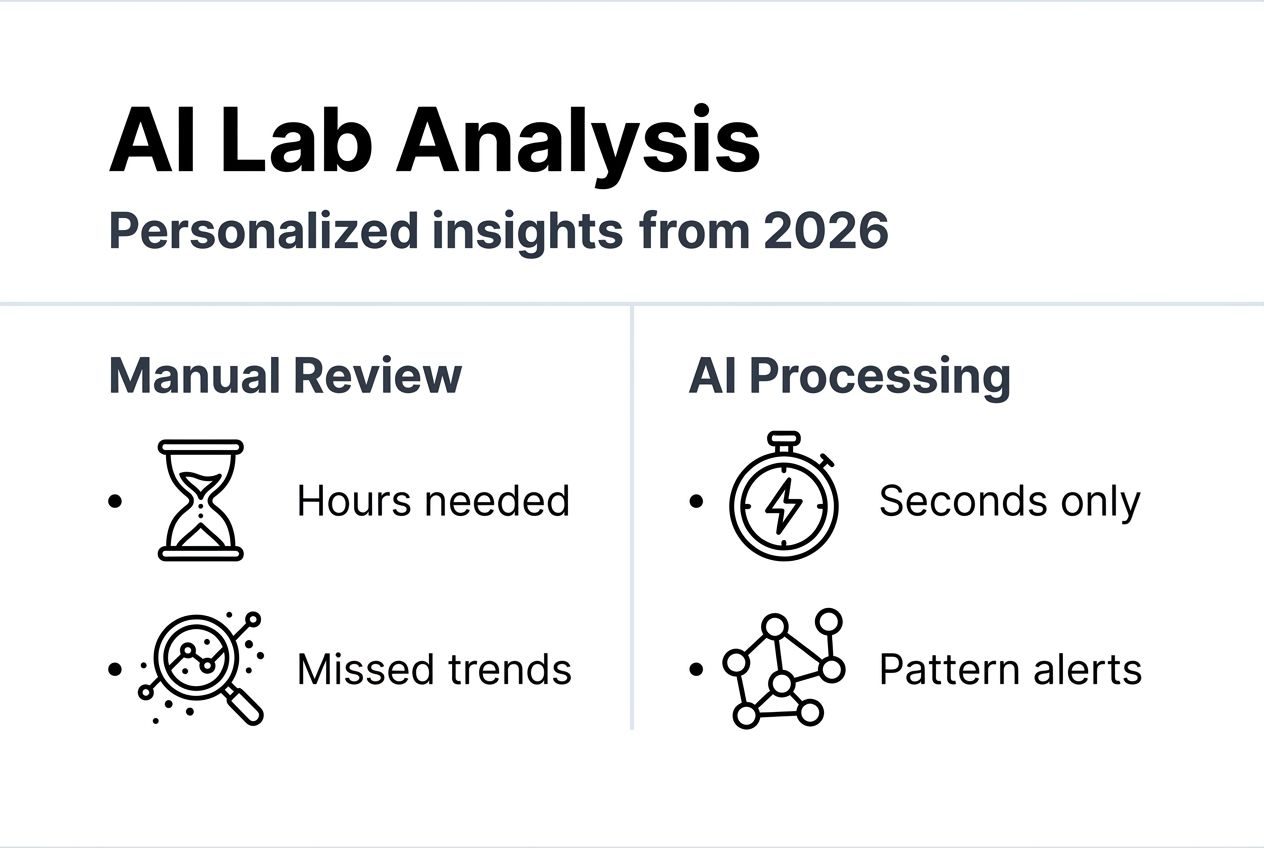
AI analysis improves diagnostic accuracy by up to 30% compared to manual interpretation in chronic disease management. The technology flags concerning trends before they become clinically obvious, enabling earlier interventions.
Clinical intelligence AI platforms transform raw data into actionable insights. They generate visualizations showing biomarker trajectories, highlight outliers, and suggest relevant follow-up tests.
| Analysis Method | Time Required | Pattern Detection | Accuracy Rate | Clinical Recommendations |
|---|---|---|---|---|
| Manual Review | 30-45 min | Limited to obvious trends | 70-75% | Practitioner-dependent |
| AI-Driven Analysis | 2-3 min | Multi-variable correlations | 95-98% | Protocol-specific suggestions |
The comparison reveals substantial advantages. AI processes complete patient histories in minutes, identifying subtle relationships between inflammation markers, nutrient status, and metabolic function. This comprehensive analysis supports more precise treatment adjustments.
Practitioners receive alerts when biomarkers deviate from expected trajectories. The system recommends specific interventions based on successful outcomes in similar cases. This decision support enhances clinical confidence while reducing cognitive load.
Debunking common misconceptions about AI in functional medicine
Many practitioners hesitate to adopt AI due to misunderstandings about its role and capabilities. The most prevalent misconception positions AI as a replacement for clinical judgment. In reality, AI functions as an intelligent assistant that enhances rather than supplants practitioner expertise.
Clinical reasoning requires contextual understanding, empathy, and nuanced interpretation that current AI cannot replicate. The technology excels at data processing and pattern recognition but lacks the holistic patient understanding that defines functional medicine practice.
Surveys show 78% of practitioners who initially feared AI displacement now view it as an essential productivity tool. They report using AI for routine tasks while dedicating more time to complex clinical decisions and patient relationships.
Common misconceptions include:
- AI will fully automate treatment decisions (it provides options requiring clinical approval)
- AI understands patient context as well as practitioners (it analyzes data but lacks experiential wisdom)
- AI eliminates the need for continuing education (practitioners must interpret AI outputs)
- AI works independently without oversight (responsible use requires validation of all recommendations)
The clinical intelligence landscape in 2026 emphasizes augmentation over automation. Best practices involve treating AI as a highly capable research assistant that prepares information for practitioner review.
Over-reliance represents a genuine risk. Practitioners must maintain critical thinking skills and question AI recommendations that seem inconsistent with patient presentation. The technology should accelerate workflows without creating blind spots in clinical assessment.
Integration of AI solutions with EHR systems in functional medicine
Seamless EHR integration determines AI platform success in real-world practice. Practitioners cannot afford fragmented systems requiring duplicate data entry or manual information transfer between applications.
Modern AI platforms connect directly with popular functional medicine EHRs. Practice Better and Cerbo users benefit from bidirectional data flow that keeps patient records synchronized across systems. Labs, supplements, and care plans update automatically.
This automation in healthcare workflows eliminates redundant documentation. When labs arrive in the EHR, AI immediately analyzes results and flags relevant findings. Generated care plans export directly to patient portals without manual formatting.
Practices report 75% improvement in clinical data management after implementing integrated AI solutions. Time previously spent on administrative tasks now supports direct patient care. Data accuracy improves as manual transcription errors disappear.
| EHR System | AI Integration Features | Data Sync | Workflow Impact | Setup Complexity |
|---|---|---|---|---|
| Practice Better | Full bidirectional sync, auto care plan export | Real-time | High efficiency gains | Moderate |
| Cerbo | Lab analysis integration, supplement ordering | Near real-time | Streamlined protocols | Low |
| Standalone | Manual data entry required | Batch uploads | Limited automation | Minimal |
The comparison highlights integration advantages. Real-time synchronization ensures AI works with current patient data. Automated exports eliminate formatting work. Practitioners review and approve recommendations within their existing workflow.
Setup requires initial configuration but pays dividends through sustained efficiency. Most practices complete integration within 2-3 hours with vendor support. The investment returns multiples in saved time within the first month.
Practical benefits and challenges of implementing AI in practice
AI adoption delivers measurable improvements in practitioner wellbeing and clinical capacity. Practitioners report 60% reduction in cognitive burden related to documentation and data synthesis. Mental energy previously consumed by administrative tasks now supports complex clinical reasoning.
This cognitive relief translates to enhanced patient interactions. Practitioners arrive at appointments without documentation backlogs. They maintain better focus during consultations, listening more attentively and formulating more thoughtful responses.
Patient satisfaction scores increase when practitioners spend less time on computers during visits. AI handles background tasks, allowing eye contact and meaningful dialogue. The technology enables the patient-centered care approach that defines functional medicine philosophy.
Key benefits include:
- More time for therapeutic relationship building
- Reduced evening and weekend charting
- Faster response to patient messages
- Increased daily patient capacity without burnout
Challenges exist alongside benefits. Some practitioners struggle with the learning curve during initial adoption. Training staff on new workflows requires dedicated time and patience. The transition period may temporarily reduce efficiency before improvements materialize.
Maintaining care personalization presents another challenge. AI generates excellent starting points but cannot replicate the intuitive adjustments practitioners make based on patient demeanor, communication style, and unstated concerns. The human element remains irreplaceable.
Over-reliance creates risks when practitioners accept AI recommendations without sufficient scrutiny. Effective implementation requires establishing validation protocols. Review all generated content, question unexpected recommendations, and trust clinical intuition when AI outputs seem inconsistent.
Pro Tip: Implement AI gradually, starting with one workflow component like lab analysis or nutrition planning. Master each feature before adding capabilities to prevent overwhelm and ensure proper validation habits develop.
Conclusion: Maximizing AI's potential in functional medicine
AI fundamentally transforms functional medicine practice through intelligent workflow automation and enhanced personalization. The technology saves practitioners 4+ hours daily while improving diagnostic accuracy by up to 30%. These efficiency gains enable deeper patient relationships and more thoughtful clinical decision-making.
Successful AI adoption requires strategic implementation focused on augmentation rather than replacement. Practitioners maintain essential oversight while AI handles time-consuming data synthesis. Seamless EHR integration ensures the technology enhances rather than disrupts existing workflows.
The functional medicine community stands at an inflection point. Early adopters gain competitive advantages through superior efficiency and care quality. Patients increasingly expect the personalized attention that AI-supported practices deliver.
Balanced adoption proves crucial. Invest in proper training, establish validation protocols, and maintain the human-centered approach that defines functional medicine. AI provides the tools to practice at the top of your license, dedicating expertise where it matters most.
Explore AI solutions for functional medicine practices
Functional and integrative medicine practitioners need specialized AI tools designed for complex protocols and personalized care. Generic healthcare AI falls short when managing multifactorial chronic diseases requiring nuanced clinical judgment.
Meelio delivers protocol-specific intelligence for frameworks like Bredesen, Shoemaker, and Wahls. The platform generates comprehensive treatment plans aligned with functional medicine principles while respecting individual patient contexts.
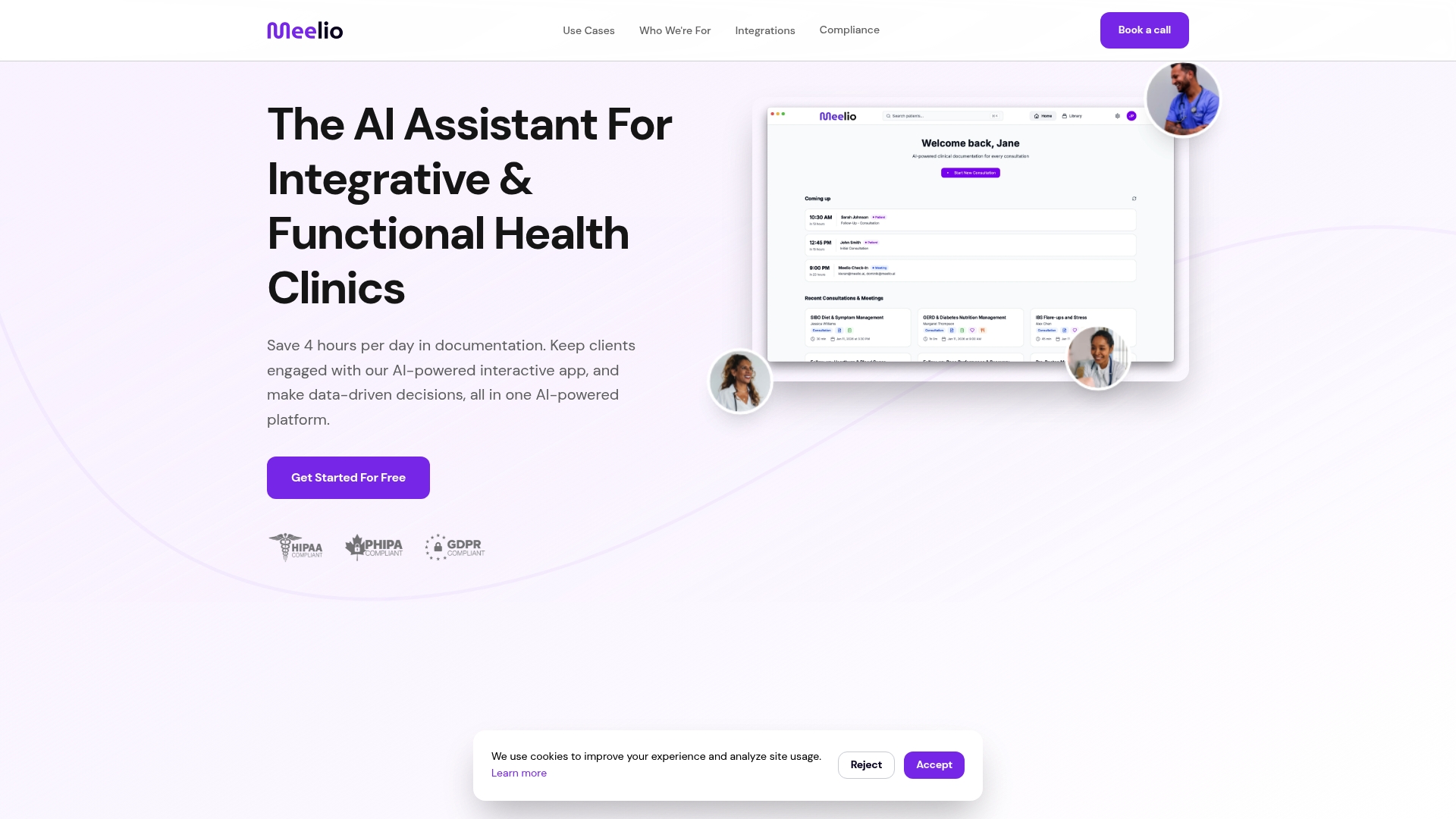
AI care plans automate the documentation and planning burden that consumes practitioner time. The system analyzes patient data to recommend evidence-based interventions tailored to specific conditions and goals. AI meal planning creates personalized nutrition protocols that patients actually follow, improving adherence and clinical outcomes. Integration with Practice Better and Cerbo ensures seamless workflow enhancement without system fragmentation. Explore these solutions to reclaim your time and elevate patient care.
FAQ
What are the main benefits of AI in functional medicine?
AI automates complex clinical workflows, saving practitioners over 4 hours daily on documentation and protocol implementation. The technology enhances diagnostic accuracy by up to 30% through advanced longitudinal lab analysis. AI generates personalized nutrition and care plans aligned with functional medicine frameworks, improving patient adherence and outcomes.
Does AI replace the role of a functional medicine practitioner?
AI serves as an intelligent assistant that enhances clinical decision-making without replacing practitioner expertise. The technology handles data synthesis and routine documentation while practitioners maintain full oversight of treatment decisions. Clinical judgment, patient relationships, and contextual understanding remain essential human contributions that AI cannot replicate.
How does AI integrate with existing clinical systems like EHR?
Modern AI platforms offer seamless integration with popular functional medicine EHRs including Practice Better and Cerbo. Bidirectional data synchronization ensures patient information stays current across systems without manual entry. This integration improves clinical data management by 75% while eliminating redundant documentation tasks.
What are common challenges when adopting AI in practice?
Practitioners face initial learning curves requiring dedicated training time for staff and workflow adjustments. Over-reliance on AI recommendations without sufficient clinical validation presents risks that proper oversight protocols can mitigate. Balancing AI efficiency with maintaining personalized patient interactions requires intentional focus on preserving the human element of care. Gradual implementation starting with one workflow component helps practices adapt successfully.