AI in Healthcare: Save 4+ Hours Daily in 2026
Discover how AI in healthcare saves functional medicine clinicians 4+ hours daily through workflow automation, care plan generation, and protocol-specific intelligence in 2026.

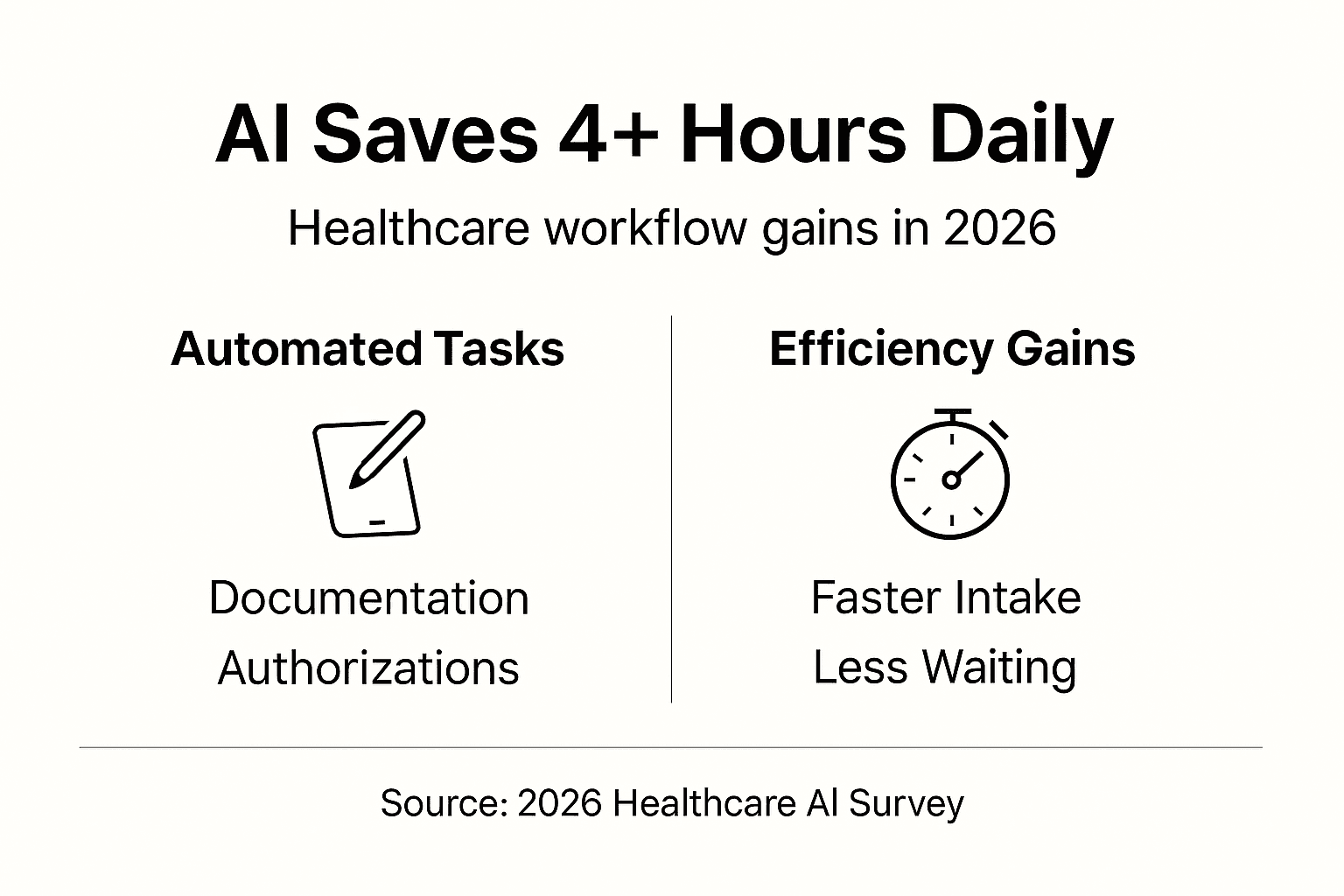
Functional medicine clinicians face overwhelming documentation demands that consume precious time meant for patient care. AI-powered clinical workflow platforms in functional medicine reduce documentation time by over 4 hours daily per clinician, freeing practitioners to focus on complex case analysis and therapeutic relationships. This guide explores how AI transforms functional medicine workflows while preserving the clinical judgment that makes integrative care effective.
Table of Contents
- Introduction To AI In Functional Medicine
- AI-Powered Workflow Automation In Functional Medicine
- Balancing Automation And Clinical Judgment
- Governance And Ethical Considerations For Healthcare AI
- Common Misconceptions About AI In Healthcare
- Comparing AI Solutions Tailored For Functional Medicine
- Practical Implementation: Optimizing Patient Care With AI
- Discover Meelio: AI Solutions For Functional Medicine Clinicians
- Frequently Asked Questions
Key Takeaways
| Point | Details |
|---|---|
| Healthcare AI adoption | Approximately 70% of healthcare organizations are actively using AI in 2026, with generative AI supporting complex clinical workflows. |
| Time savings | AI reduces documentation time by over 4 hours daily and enables clinicians to see 15% more patients per hour. |
| Clinical augmentation | AI automates routine tasks while preserving human judgment, empathy, and complex decision-making capabilities. |
| Governance imperative | 95% of AI pilots fail without governed interoperable data, making ethical frameworks essential for success. |
| Protocol specialization | Specialized AI tools like Meelio tailor workflows to functional medicine protocols such as Bredesen, Shoemaker, and Wahls. |
Introduction to AI in Functional Medicine
Functional medicine practitioners navigate extraordinary complexity. You synthesize genomic data, metabolic panels, inflammatory markers, and lifestyle factors to create personalized protocols. This data-heavy approach delivers transformative patient outcomes but comes with a cost: cognitive overload and documentation fatigue that limit your capacity to serve more patients.
Approximately 70% of healthcare organizations are actively using AI in 2026, with a surge in generative AI supporting complex workflows. This adoption wave reflects a critical shift. Clinicians no longer question whether to use AI but how to integrate it effectively into their practice patterns.
The barriers to AI adoption in functional medicine are dissolving:
- Manual data synthesis across multiple systems consumes hours that could be spent on patient interaction
- Documentation requirements pull focus from therapeutic conversations during consultations
- Complex integrative protocols demand cognitive resources that leave little energy for personalized care adjustments
- Traditional EHR systems lack intelligence to support functional medicine decision frameworks
AI transforms these challenges into opportunities. AI assistant platforms now handle data aggregation, protocol generation, and longitudinal analysis while you maintain clinical oversight. The technology excels at pattern recognition across thousands of biomarkers, freeing you to apply clinical wisdom where it matters most: interpreting results through the lens of each patient's unique story.
AI-Powered Workflow Automation in Functional Medicine
Automation targets the repetitive cognitive tasks that drain your time without adding clinical value. AI reduces documentation time by over 4 hours daily and enables clinicians to see 15% more patients per hour. This efficiency gain translates directly into expanded patient access and improved practice economics.
Consider the typical functional medicine workflow. You review labs, synthesize findings with patient history, generate personalized protocols, create meal plans aligned with therapeutic goals, and document everything for compliance. Each step requires clinical knowledge but follows predictable patterns that AI can learn.
Ambient AI tools reduce documentation by 2-3 hours and prior authorization times by up to 30%. These platforms capture conversation details in real time, allowing you to maintain eye contact and therapeutic presence while the system handles note generation. The technology distinguishes clinical observations from patient-reported outcomes, structuring information according to your documentation preferences.

AI medical scribe solutions have evolved beyond simple transcription. Modern platforms understand functional medicine terminology, recognize protocol-specific interventions, and map recommendations to evidence-based frameworks. When you mention adjusting methylation support or modifying elimination diet phases, the AI contextualizes these decisions within the broader care plan.
Implement AI automation using this stepwise approach:
- Audit your current workflows to identify time-consuming repetitive tasks that follow predictable patterns
- Select AI tools that integrate with your existing EHR and support functional medicine protocols specifically
- Train your clinical team on AI capabilities and limitations to build confidence and appropriate oversight habits
- Start with low-risk automation like visit summaries before expanding to care plan generation
- Measure time savings and clinical accuracy to refine your AI deployment strategy continuously
Pro Tip: Track your pre-AI and post-AI documentation time for 30 days to quantify efficiency gains. Share these metrics with your team to build momentum for broader AI adoption across patient management workflow insights.
The efficiency gains extend beyond documentation. Automation in healthcare workflows streamlines prior authorization, appointment scheduling, and follow-up protocols. AI handles administrative friction so you can focus on clinical reasoning that requires human judgment and empathy.
Balancing Automation and Clinical Judgment
AI augments your clinical capabilities but never replaces the judgment that makes functional medicine effective. AI augments clinicians by automating routine cognitive tasks while preserving complex judgment and empathy. You remain the decision maker who interprets AI-generated insights through your clinical experience.
The distinction between augmentation and replacement matters enormously. Augmentation means AI handles data synthesis while you focus on nuanced case analysis. Replacement would mean abdicating clinical decisions to algorithms, a dangerous path that compromises patient safety and erodes your expertise over time.
70% of physicians want to lead AI integration to ensure it supports rather than replaces clinicians. This leadership role is essential. You understand the clinical context that AI cannot grasp: patient motivation, social determinants, treatment adherence patterns, and therapeutic relationships that influence outcomes.
Maintain clinical control through these practices:
- Review all AI-generated recommendations before implementation, treating them as suggestions rather than directives
- Validate AI insights against your clinical intuition and patient-specific factors the algorithm cannot assess
- Document your clinical reasoning when you modify or override AI recommendations to create an audit trail
- Stay current on functional medicine research so your knowledge base evolves alongside AI capabilities
Pro Tip: Schedule weekly case reviews where you compare AI recommendations with your final clinical decisions. This practice sharpens your ability to identify when AI adds value versus when human judgment should prevail.
Common pitfalls include over-reliance on AI outputs without critical evaluation and underutilizing AI capabilities due to excessive skepticism. The optimal approach balances trust in AI's pattern recognition with healthy skepticism about its limitations. AI for clinicians works best when you engage critically with its suggestions rather than accepting or rejecting them reflexively.
"AI should amplify the art of medicine, not replace it. The technology handles what computers do best so clinicians can focus on what humans do best: connecting with patients and applying wisdom earned through years of practice."
Governance and Ethical Considerations for Healthcare AI
AI success depends on governed data infrastructure and ethical frameworks that protect patients while enabling innovation. 95% of AI pilots fail without governed interoperable data; governance frameworks ensure ethical and compliant AI use. This failure rate reflects the fundamental importance of data quality and structure.
Governed data means structured, validated information that AI can process reliably. When data lacks standardization or contains errors, AI amplifies these problems rather than correcting them. Your AI tools are only as good as the data they consume, making data governance a clinical imperative rather than an IT concern.
Shadow AI increases risks of invalid data and clinician deskilling; clinician oversight is essential. Shadow AI refers to unvetted tools that clinicians adopt without institutional oversight. While these tools may seem helpful, they bypass security protocols and quality controls that protect patient data and clinical accuracy.
Establish governance through these essential practices:
- Implement institutional AI policies that define approved tools, use cases, and oversight requirements
- Ensure all AI platforms comply with HIPAA and state privacy regulations through regular audits
- Create feedback loops where clinicians report AI errors or limitations to improve system performance
- Train staff on appropriate AI use cases and the importance of human validation for clinical decisions
Compliance extends beyond privacy to include ethical considerations around bias, transparency, and patient consent. AI trained on non-representative datasets may perform poorly for underserved populations. You must evaluate whether your AI tools have been validated across diverse patient groups relevant to your practice demographics.
Transparency matters too. Patients deserve to know when AI contributes to their care plans. Many practitioners find that patients appreciate AI assistance when framed as a tool that enhances rather than replaces clinical expertise. Clear communication about AI's role builds trust and aligns with ethical principles of informed consent.
The risks of ungoverned AI deployment include clinical errors from invalid data, loss of clinical skills through over-reliance on automation, and regulatory violations that jeopardize your practice. Strong governance frameworks mitigate these risks while enabling you to capture AI's benefits safely. Review healthcare data privacy policies to understand compliance requirements in your jurisdiction.
Common Misconceptions About AI in Healthcare
Misunderstandings about AI capabilities and limitations create unnecessary barriers to adoption. Clearing up these misconceptions helps you approach AI implementation with realistic expectations and appropriate safeguards.
Misconception that AI replaces clinicians is incorrect; AI best functions as augmentation. The replacement narrative persists despite evidence showing AI's greatest value comes from handling routine tasks so you can focus on complex clinical reasoning. No AI can replicate the therapeutic relationship or apply the contextual wisdom you bring to patient care.
Another common myth suggests more data automatically produces better AI performance. In reality, governed, structured data matters far more than volume. A small dataset of validated, interoperable information enables more reliable AI than massive amounts of unstructured, error-prone data. Quality trumps quantity in AI training and deployment.
Many clinicians believe generative AI operates without oversight requirements. This misconception is dangerous. Generative AI creates novel content based on patterns in training data, but it can produce plausible-sounding recommendations that are clinically inappropriate. Every AI output requires your professional validation before implementation.
Key misconceptions to reject:
- AI will automate clinical judgment and eliminate the need for trained practitioners
- More patient data automatically improves AI accuracy regardless of data quality or governance
- Generative AI outputs are inherently reliable and require minimal clinical oversight
- AI adoption means surrendering control over clinical workflows to algorithms
- Only large health systems can afford or benefit from AI integration
The final misconception particularly affects functional medicine practices. AI tools designed for your specialty have become accessible and affordable for small practices. You don't need enterprise-scale infrastructure to capture meaningful efficiency gains and clinical improvements.
Comparing AI Solutions Tailored for Functional Medicine
Not all AI platforms understand functional medicine's unique requirements. Generic medical scribes may handle basic documentation but lack the protocol-specific intelligence that makes AI truly valuable for integrative practitioners.
| Feature | Meelio | Generic AI Scribes | Traditional EHR |
|---|---|---|---|
| Functional medicine protocols | Supports Bredesen, Shoemaker, Wahls frameworks | Limited to basic medical terminology | No protocol intelligence |
| EHR integration | Seamless with Practice Better and Cerbo | Variable, often requires manual data entry | Native but lacks AI capabilities |
| Care plan automation | Protocol-specific recommendations with evidence links | Generic care plans without protocol context | Manual care plan creation |
| Nutrition intelligence | Personalized meal plans aligned with therapeutic goals | Basic dietary documentation | No nutrition automation |
| Lab analysis | Longitudinal trending with functional ranges | Standard reference ranges only | Basic lab result display |
| Time savings | 4+ hours daily documented | 2-3 hours in documentation only | No time savings |
Meelio AI platform was built specifically for functional and integrative medicine practitioners. The platform understands that your clinical decision-making differs fundamentally from conventional medicine. When you implement a Bredesen protocol for cognitive decline, Meelio structures interventions according to the framework's specific pillars rather than treating it as generic care.
The integration capabilities matter enormously for workflow efficiency. If your AI tool requires manual data transfer between systems, you lose the time savings that make AI worthwhile. AI care planning solutions should pull patient data directly from your EHR, generate protocol-appropriate recommendations, and push finalized care plans back into your documentation system seamlessly.
Nutrition recommendations represent another differentiation point. AI meal planning tools designed for functional medicine understand therapeutic diets like AIP, low-FODMAP, and ketogenic protocols. They generate meal plans that align with your clinical goals while considering patient preferences and restrictions.
Select AI tools by evaluating protocol support, EHR compatibility, and clinical intelligence depth. A platform may excel at documentation but fail to understand the nuanced interventions that define functional medicine practice. Prioritize tools built by teams who understand your clinical frameworks rather than adapting general-purpose AI to your specialty.
Practical Implementation: Optimizing Patient Care with AI
Successful AI implementation requires strategic planning and iterative refinement. Use this framework to integrate AI tools effectively while maintaining clinical quality and staff confidence.
- Conduct a thorough workflow audit to identify bottlenecks where AI automation delivers maximum impact without compromising care quality.
- Select AI platforms that support your specific protocols and integrate with your existing technology stack to minimize disruption.
- Establish clear governance policies defining approved use cases, oversight requirements, and quality assurance processes before deployment.
- Train your entire clinical team on AI capabilities and limitations so everyone understands when to trust AI and when to apply human judgment.
- Start with pilot implementations in low-risk areas like visit summaries before expanding to higher-stakes functions like care plan generation.
- Measure concrete outcomes including time saved, patient throughput, documentation accuracy, and clinician satisfaction scores.
- Create feedback mechanisms where staff can report AI errors or suggest improvements to refine your implementation continuously.
- Iterate your AI deployment based on quantitative metrics and qualitative feedback to optimize performance over time.
Pro Tip: Identify one "AI champion" on your team who takes ownership of the implementation process. This person troubleshoots issues, trains colleagues, and serves as the liaison with your AI vendor for ongoing optimization.
The functional health assessment checklist provides a framework for evaluating where AI fits into your patient evaluation process. Many practitioners find AI most valuable during initial data synthesis and follow-up visit preparation, where pattern recognition across multiple data sources saves significant time.
Measurement matters enormously for implementation success. Track baseline metrics before AI deployment so you can quantify improvements objectively. Efficient patient management workflows depend on continuous optimization informed by data rather than assumptions.
Expect an adjustment period where efficiency may initially decline as your team learns new systems. This temporary productivity dip is normal and resolves within 4-6 weeks as AI tools become habitual. Support your team through this transition with patience and recognition that adoption curves vary by individual.
Discover Meelio: AI Solutions for Functional Medicine Clinicians
The AI strategies outlined in this guide become actionable when you implement purpose-built tools designed for functional medicine workflows. Meelio AI assistant platform delivers the protocol-specific intelligence and seamless EHR integration that make AI truly transformative for integrative practitioners.
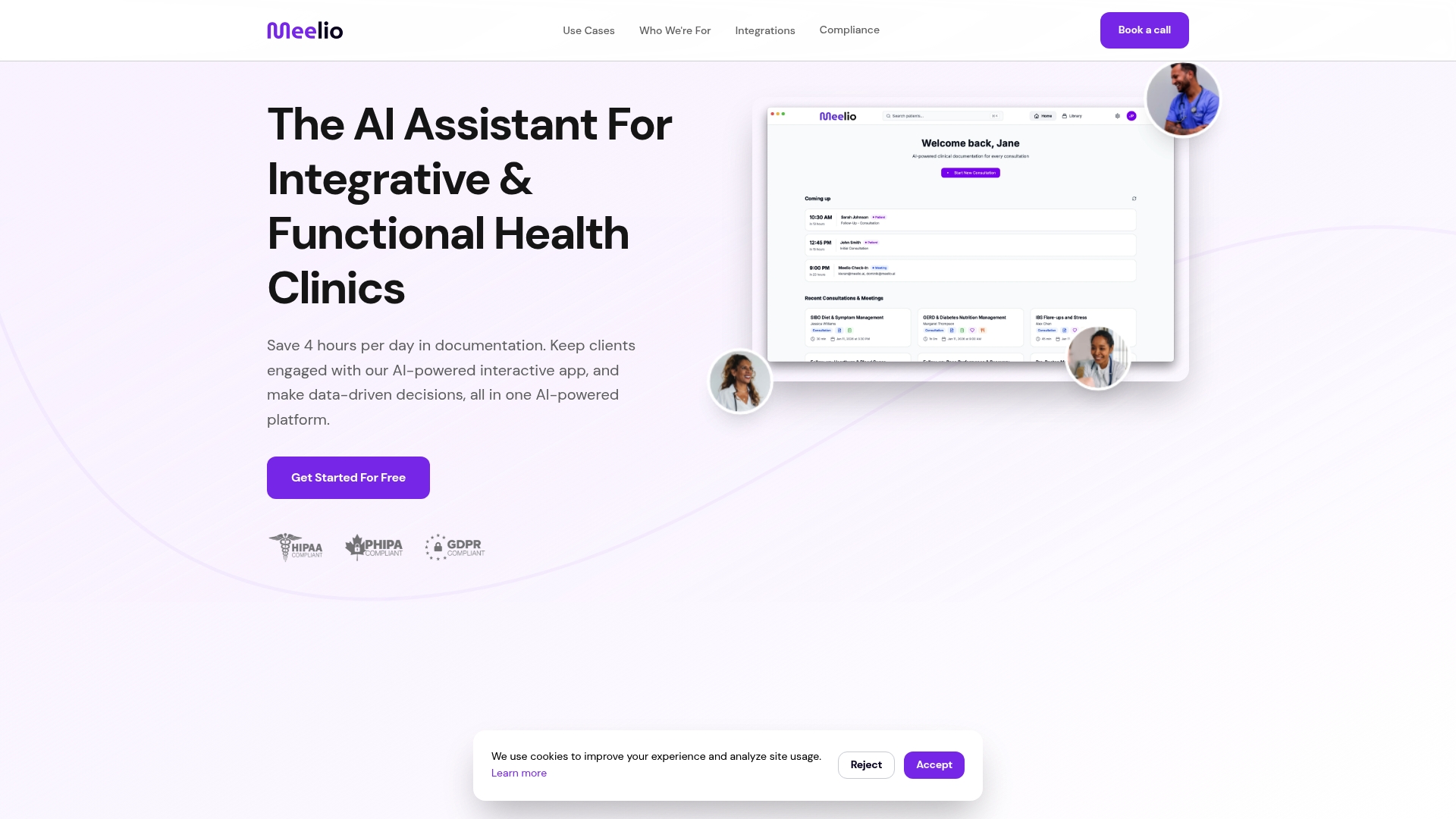
Meelio automates the time-consuming tasks that limit your patient capacity while preserving the clinical judgment that defines quality care. AI care planning tools generate evidence-based recommendations aligned with Bredesen, Shoemaker, Wahls, and other functional medicine frameworks. AI meal planning solutions create personalized nutrition protocols that support your therapeutic goals while accommodating patient preferences.
Explore how Meelio can help you reclaim 4+ hours daily while improving clinical outcomes and patient satisfaction.
Frequently Asked Questions
What tasks in functional medicine can AI automate most effectively?
AI excels at documentation, care plan generation, meal planning aligned with therapeutic diets, longitudinal lab analysis, and patient communication summaries. These tasks follow predictable patterns that AI learns quickly while requiring clinical validation.
How can clinicians maintain control while using AI-driven clinical workflows?
Review all AI recommendations before implementation, treat AI outputs as suggestions rather than directives, and document your clinical reasoning when you modify AI-generated plans. Stay current on functional medicine research so your expertise evolves alongside AI capabilities.
What are essential governance practices for AI in healthcare?
Implement institutional policies defining approved AI tools and use cases. Ensure HIPAA compliance through regular audits. Create feedback loops for reporting AI errors. Train staff on appropriate AI use and the necessity of human validation for clinical decisions.
How quickly can functional medicine practices expect to see efficiency gains after AI adoption?
Most practices see measurable time savings within 4-6 weeks as AI tools become habitual. Expect an initial adjustment period where productivity may temporarily decline before improvements materialize through consistent use and workflow optimization.
Which AI tools are best suited for dietitians vs. clinicians in integrative health?
Dietitians benefit most from AI meal planning platforms that generate therapeutic diet protocols with recipe databases and grocery lists. Clinicians need broader platforms supporting care plan automation, lab analysis, and protocol-specific clinical decision support across multiple integrative frameworks.